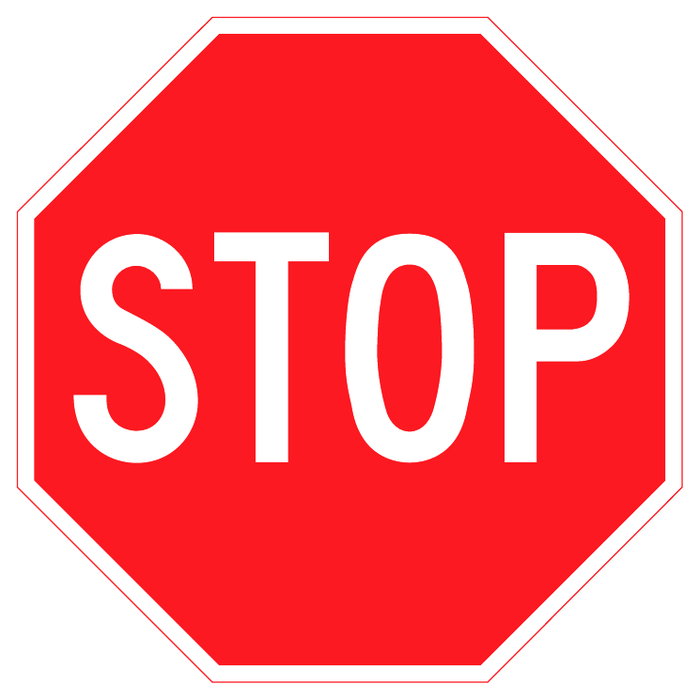
Stop
Come to a complete stop at the proper stopping point, then proceed only when safe.
Visual road-sign lab
Study the sign, its category, and the driving decision it communicates. The illustrations are simplified study graphics based on Alberta's sign catalogue.
Come to a complete stop at the proper stopping point, then proceed only when safe.
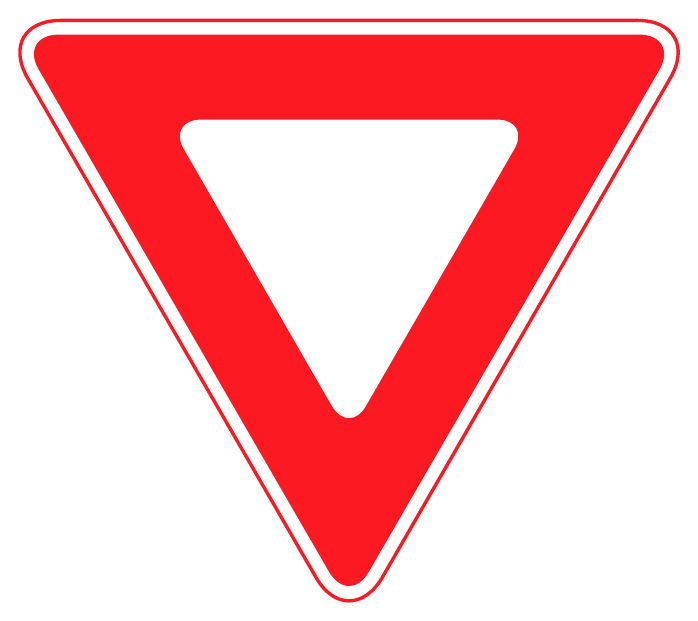
Slow down, give the right-of-way as required, and stop if necessary.
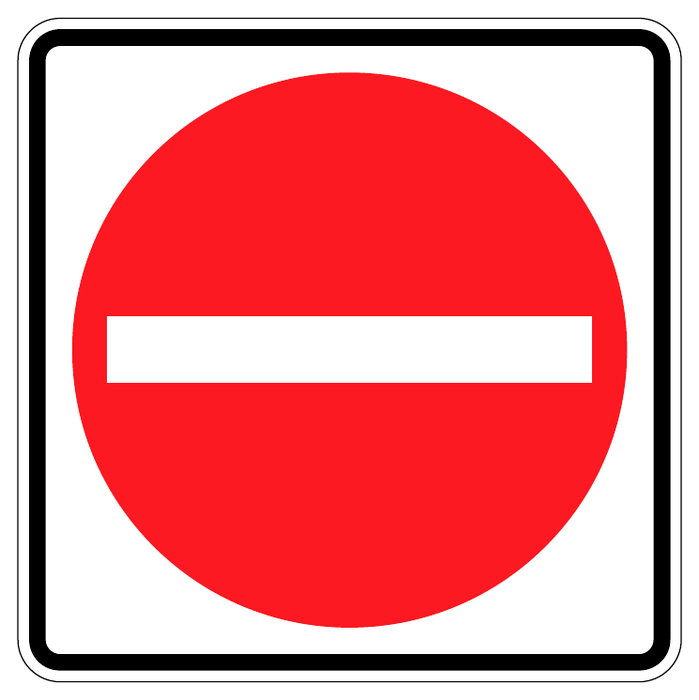
Do not drive into the roadway or lane from this direction.
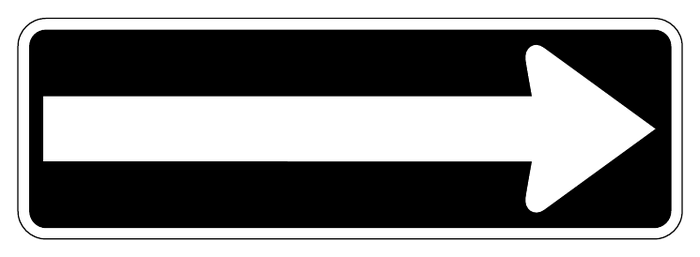
Traffic on this roadway travels only in the direction of the arrow.
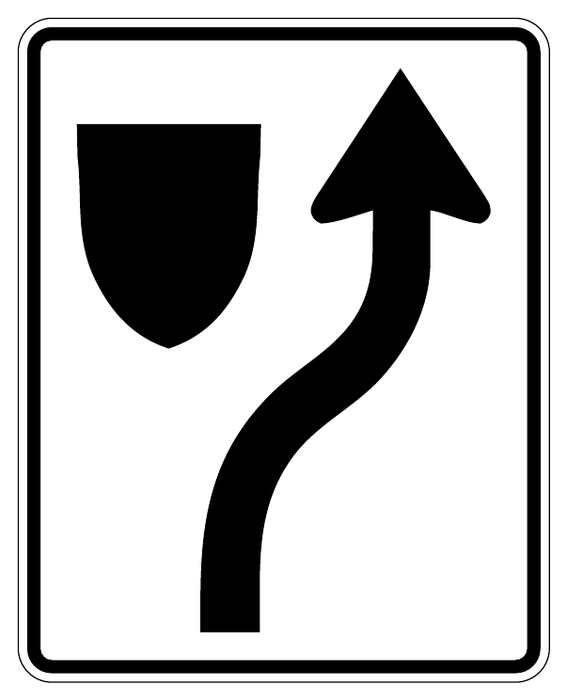
Pass to the right of the obstruction or traffic island indicated.
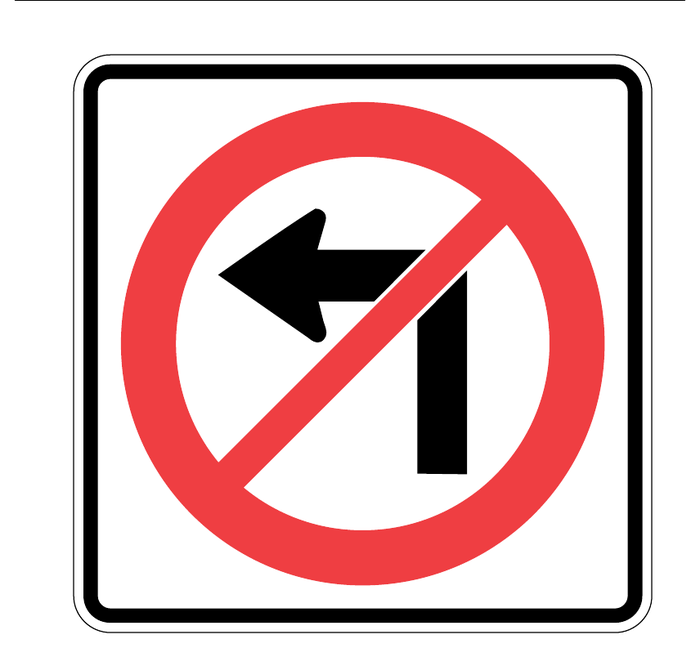
A left turn is prohibited at the location controlled by the sign.
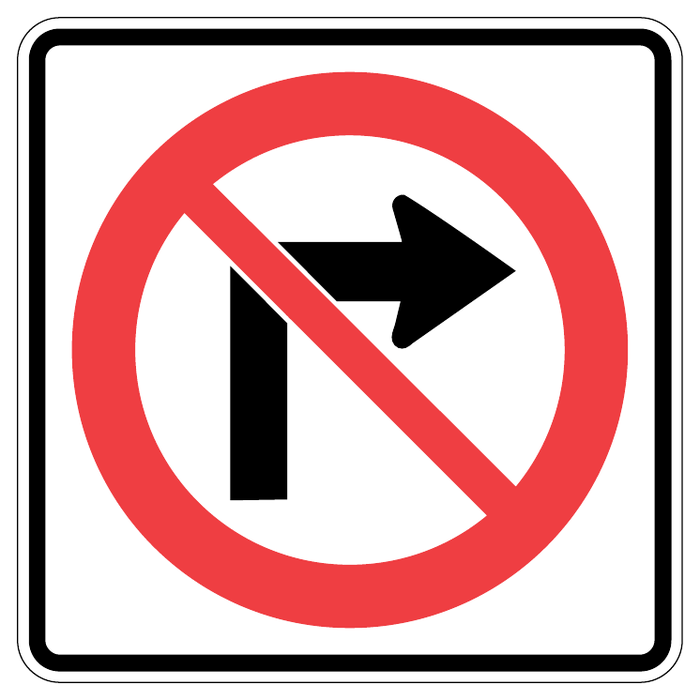
A right turn is prohibited at the location controlled by the sign.
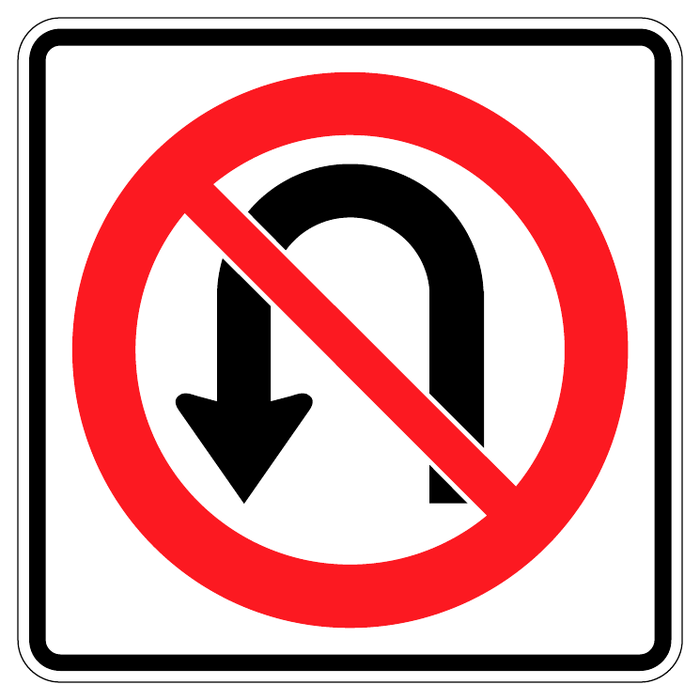
Do not make a U-turn at the location controlled by the sign.
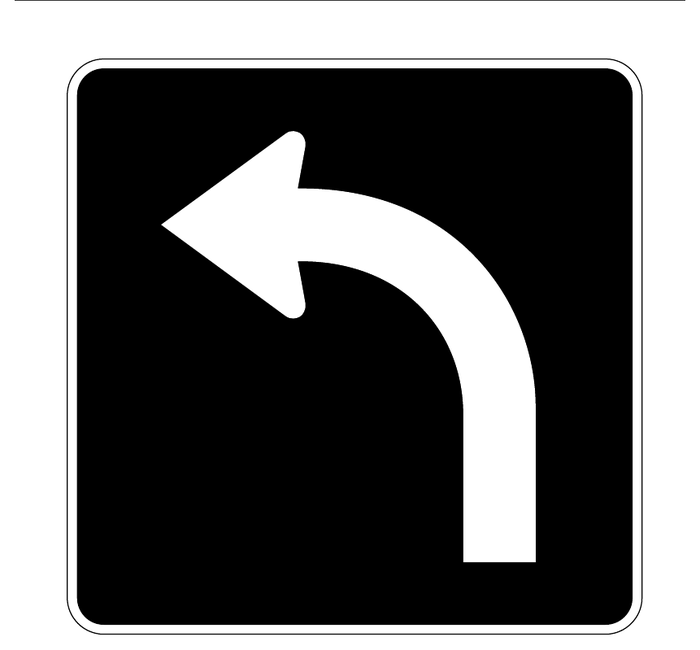
The indicated movement is permitted/required for the controlled lane: turn left.
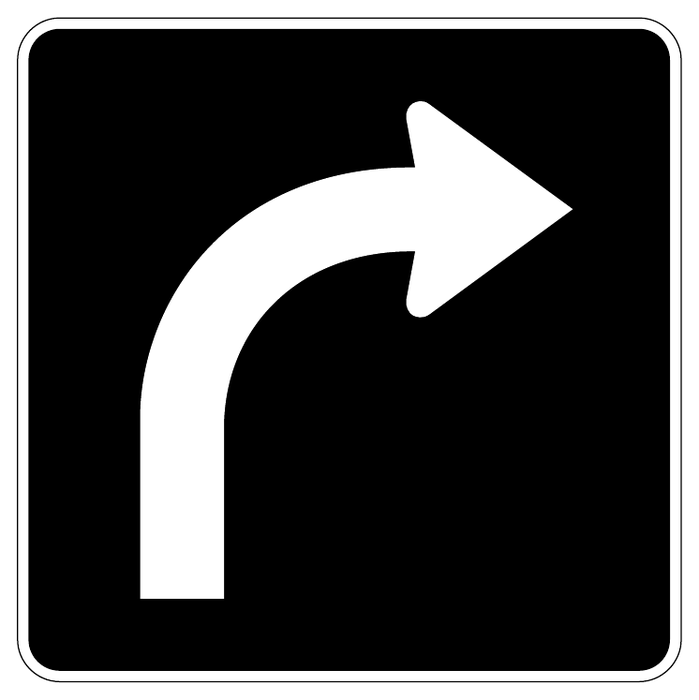
The indicated movement is permitted/required for the controlled lane: turn right.
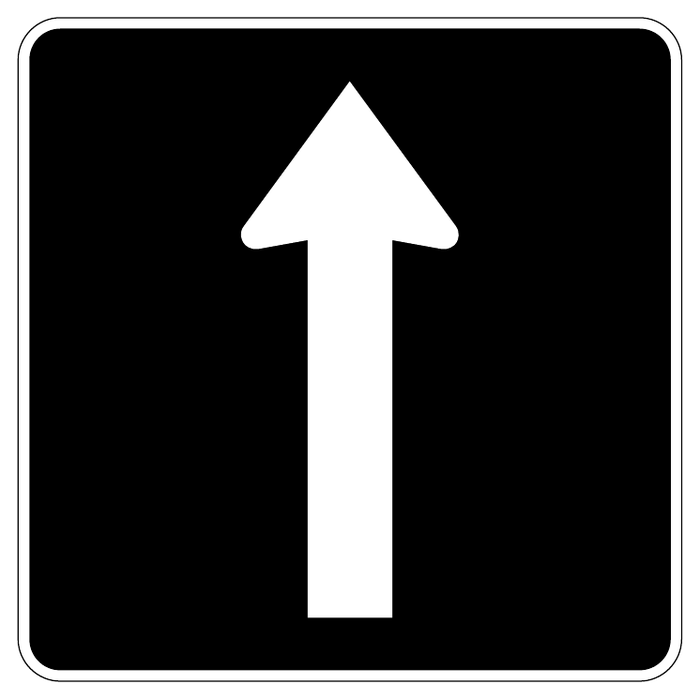
Proceed straight through from the lane controlled by the sign.
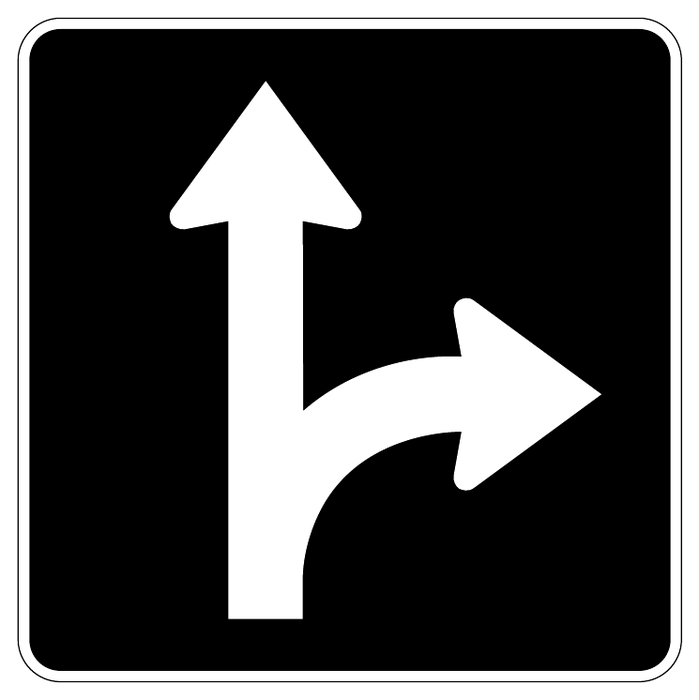
From the controlled lane, you may proceed straight or turn right.
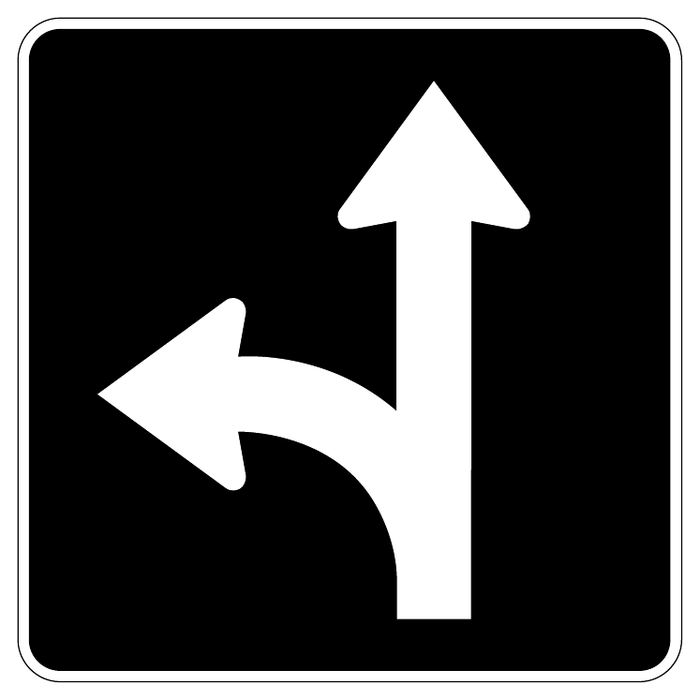
From the controlled lane, you may proceed straight or turn left.
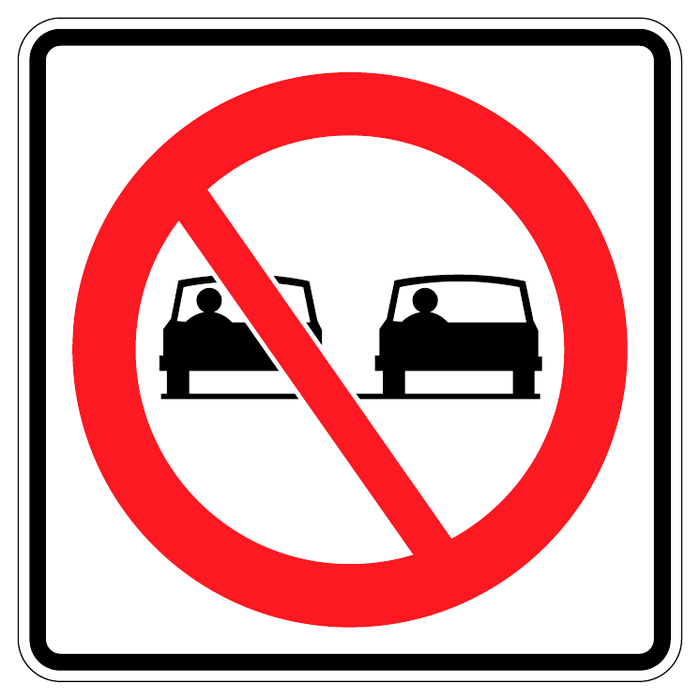
Do not pass another vehicle where this prohibition applies.
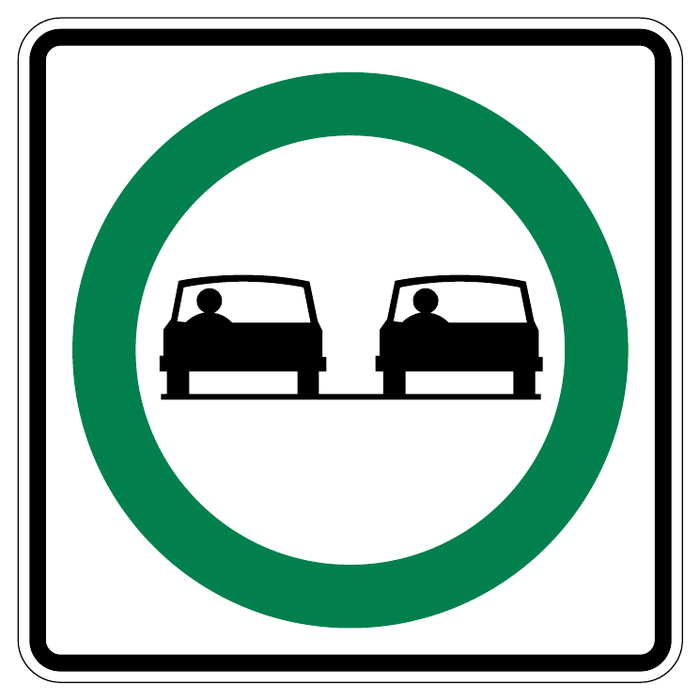
Passing is permitted when it can otherwise be completed legally and safely.
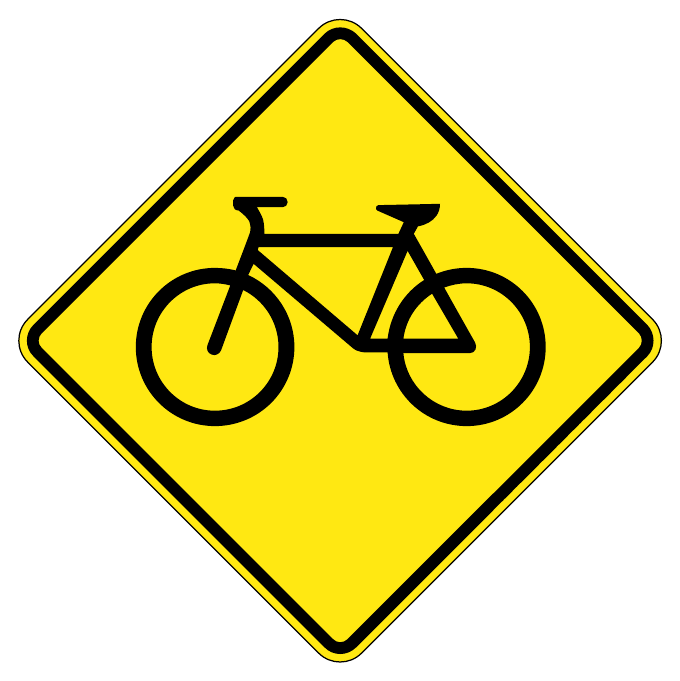
Bicycles are prohibited from the roadway or facility controlled by the sign.
The lane or facility is designated for bicycles as indicated.
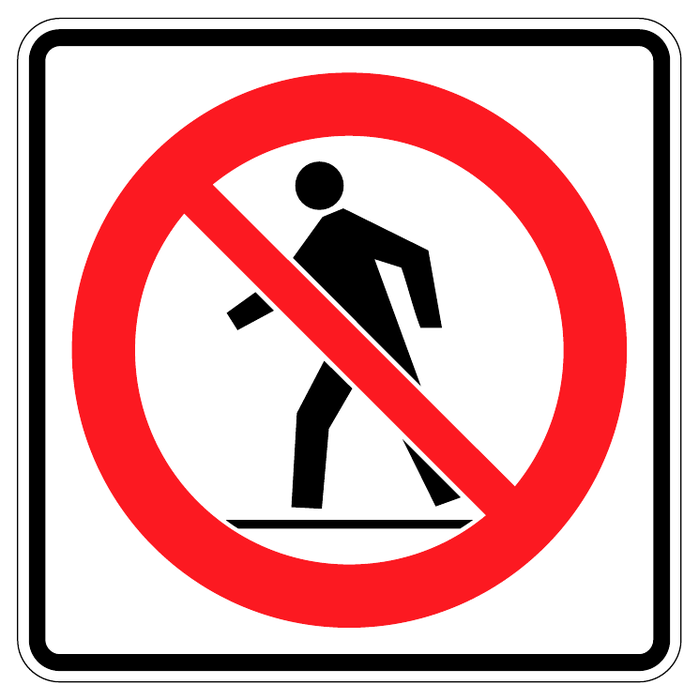
Pedestrians are prohibited from entering or using the controlled roadway/facility.
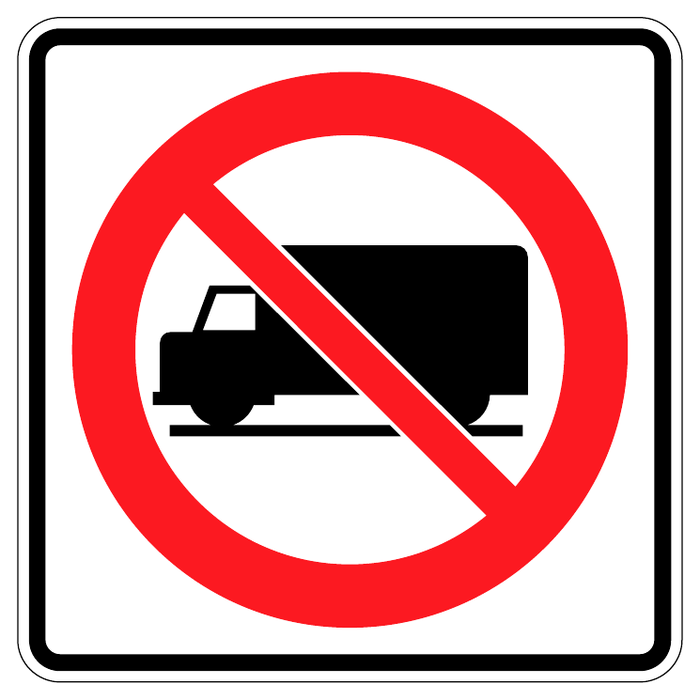
Trucks of the type covered by the sign are prohibited.
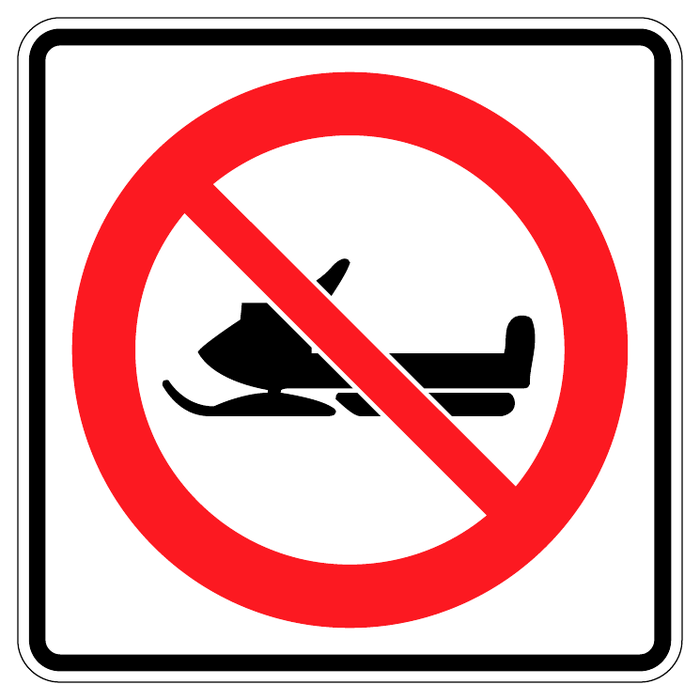
Motorized snow vehicles are prohibited where the sign applies.
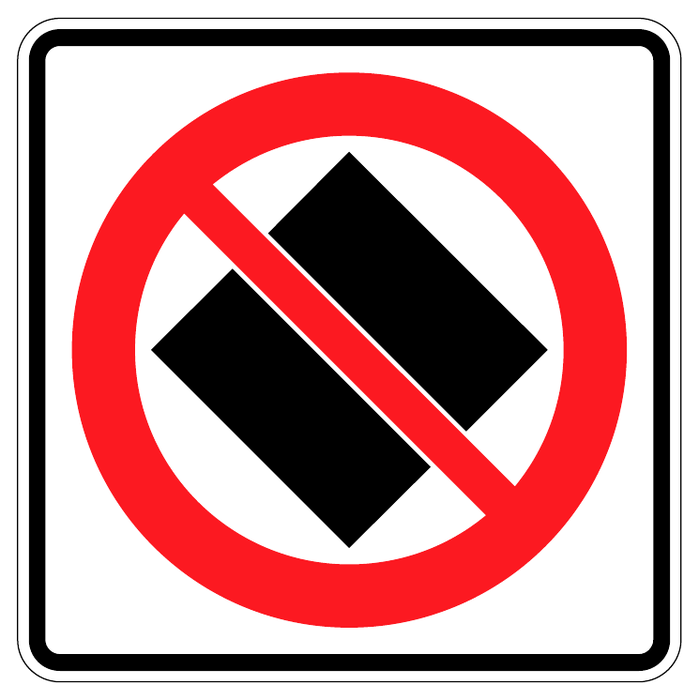
Vehicles carrying dangerous goods covered by the sign are prohibited.
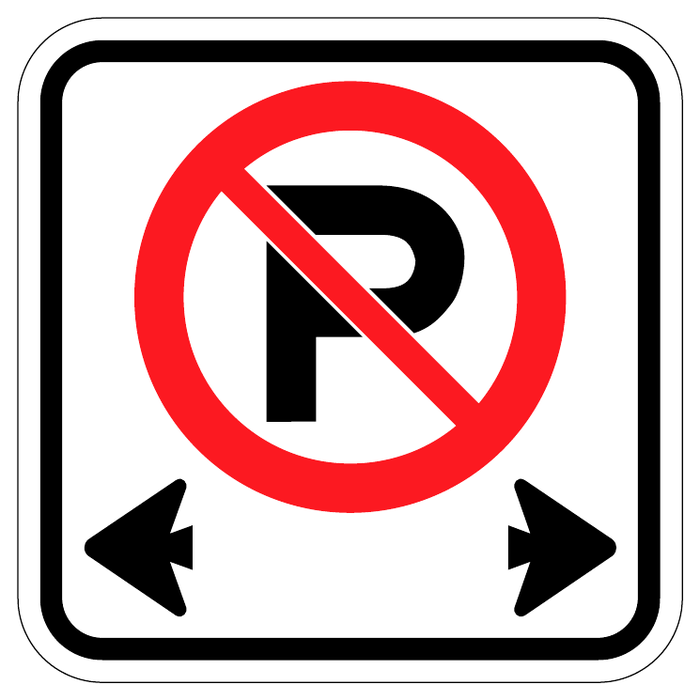
Parking is prohibited where and when the sign applies, although brief stopping may be allowed unless separately prohibited.
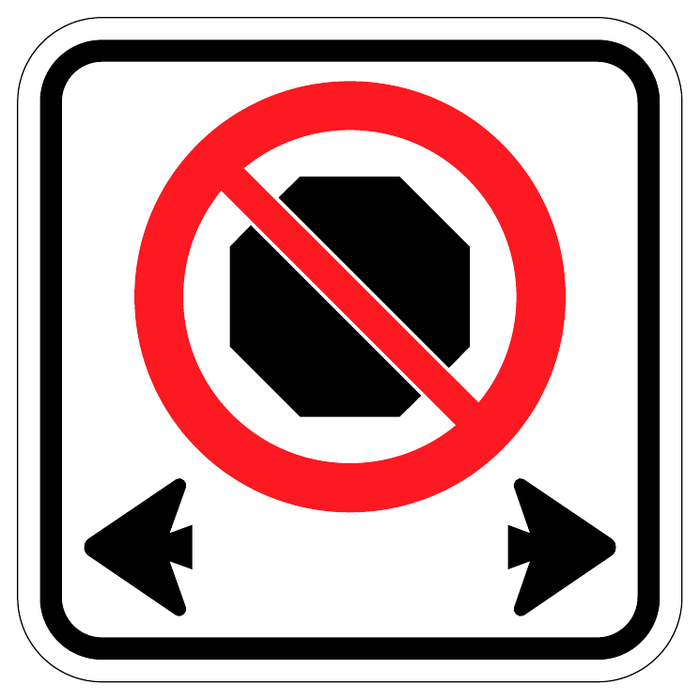
Do not stop the vehicle in the controlled area except when required by traffic or an emergency.
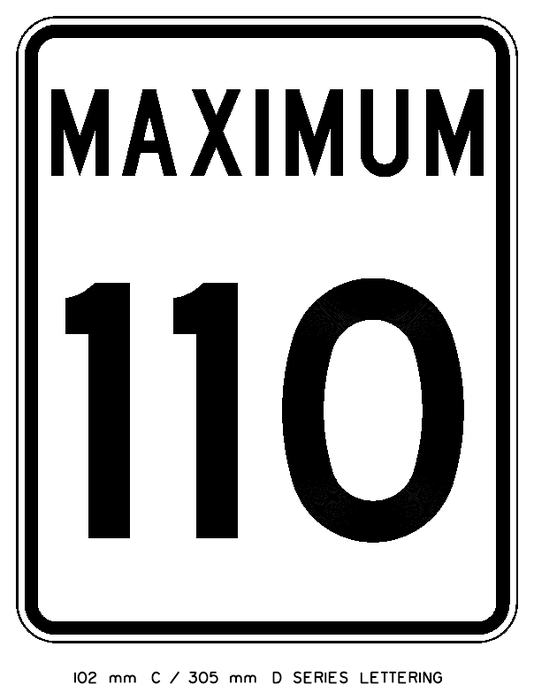
50 km/h is the maximum posted speed; you may need to drive slower when conditions require.
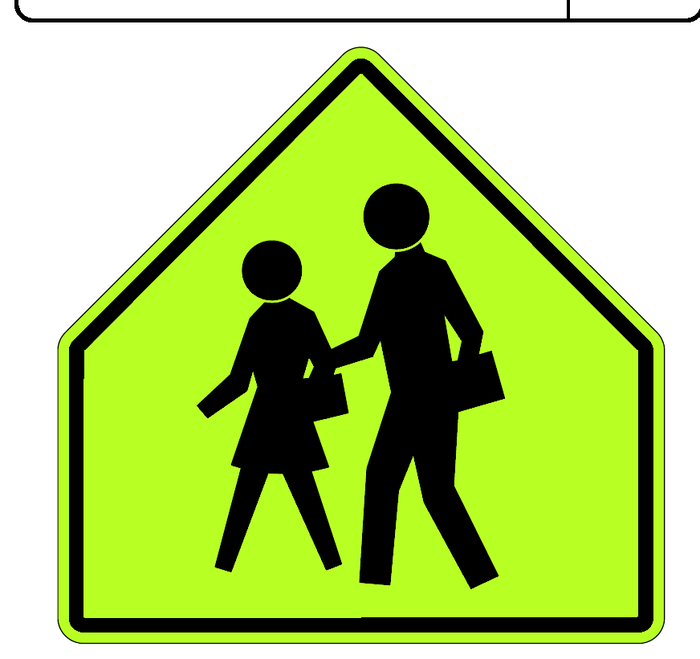
A school area is ahead; watch carefully for children and pedestrians. The sign alone does not create a 30 km/h school zone.
You are entering a school zone with the posted maximum speed when the zone is in effect; passing a vehicle travelling the same direction is also prohibited while it is in effect.
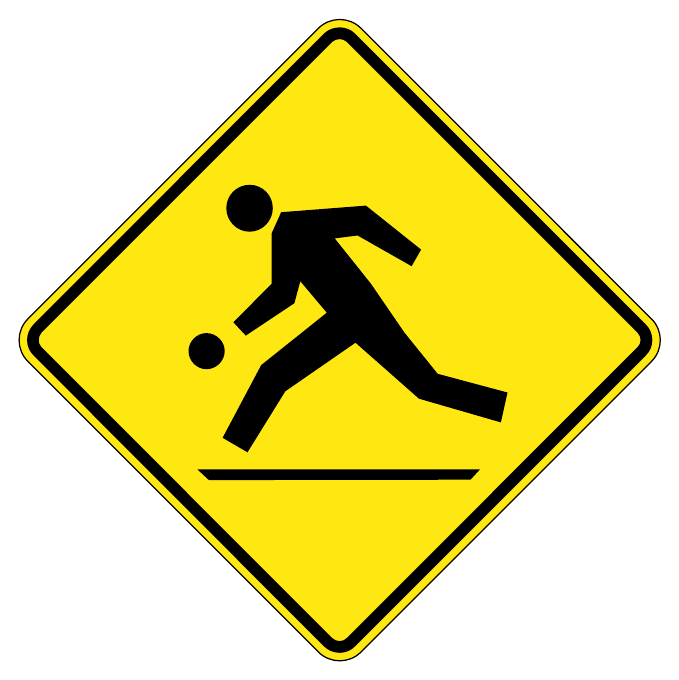
A playground area is ahead; use caution for children. Without a speed tab, the sign alone does not create a 30 km/h playground zone.
You are entering a playground zone with the posted maximum speed when the zone is in effect; passing a vehicle travelling the same direction is prohibited while the restriction is in effect.
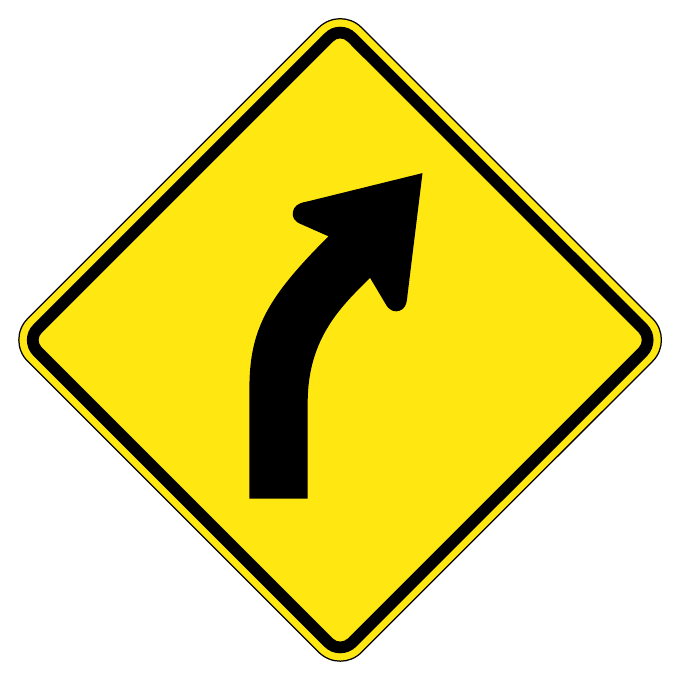
The roadway curves to the right ahead; adjust speed and lane position for the curve.
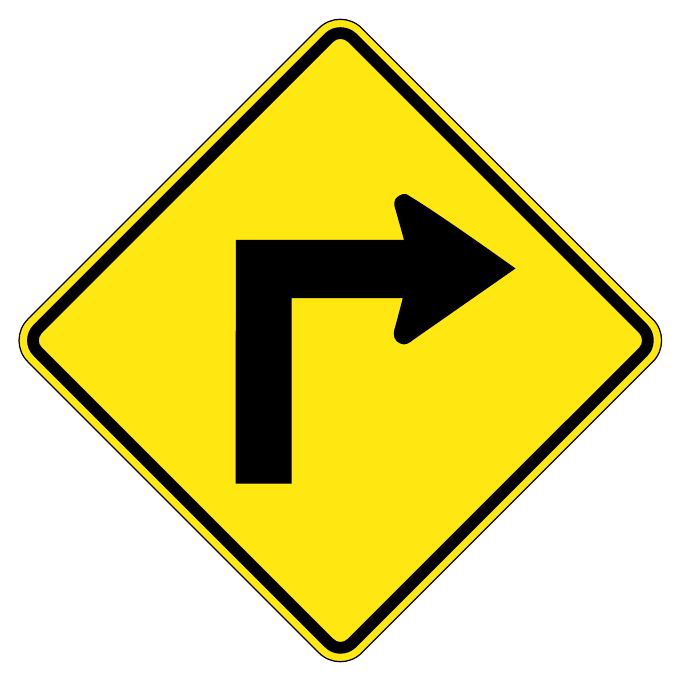
A sharp right turn is ahead and may require a greater speed reduction than a gradual curve.
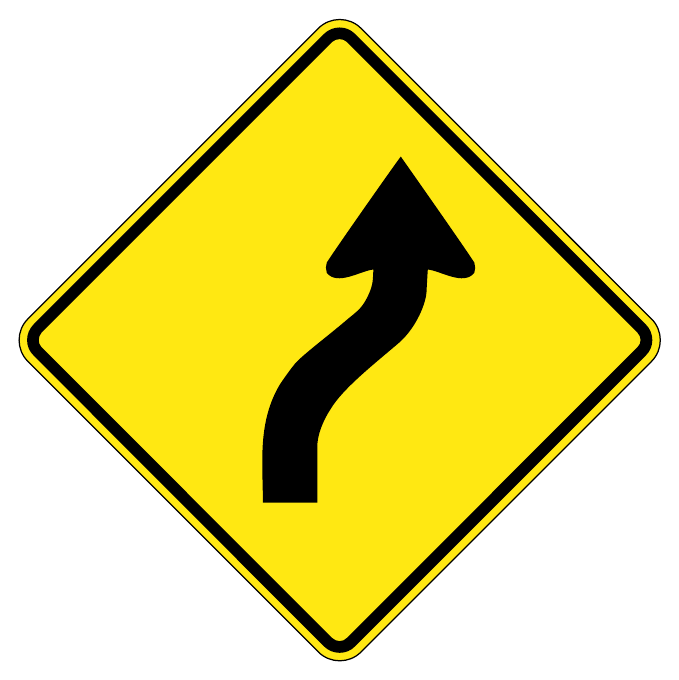
The road curves in one direction and then the opposite direction ahead.
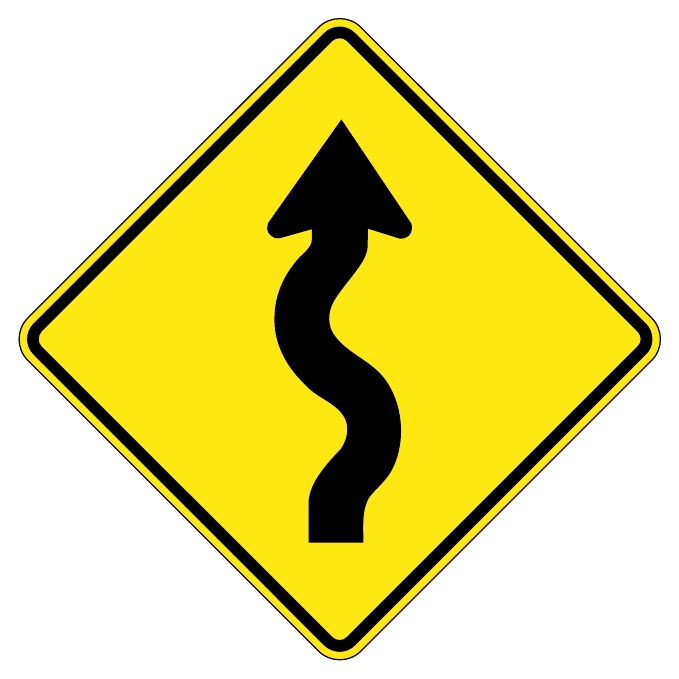
A series of curves or bends is ahead; reduce speed as conditions require.
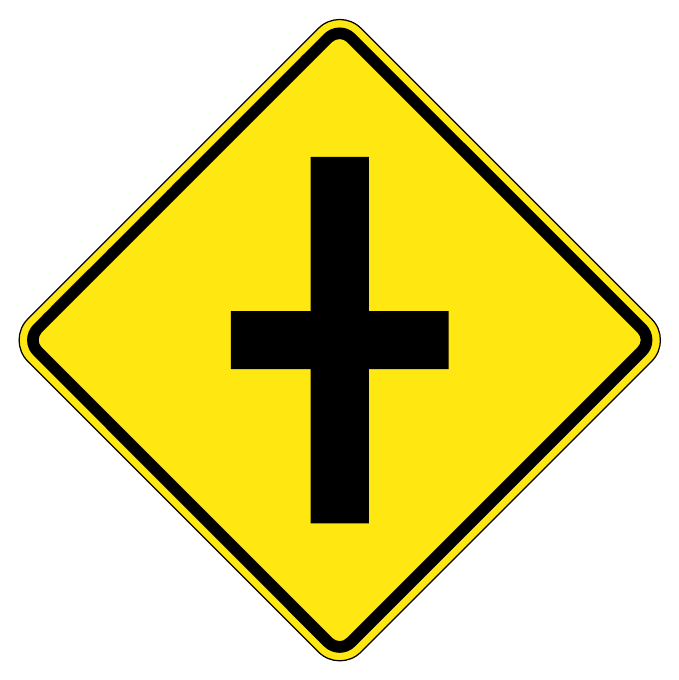
A four-way intersection is ahead; be prepared for crossing traffic.
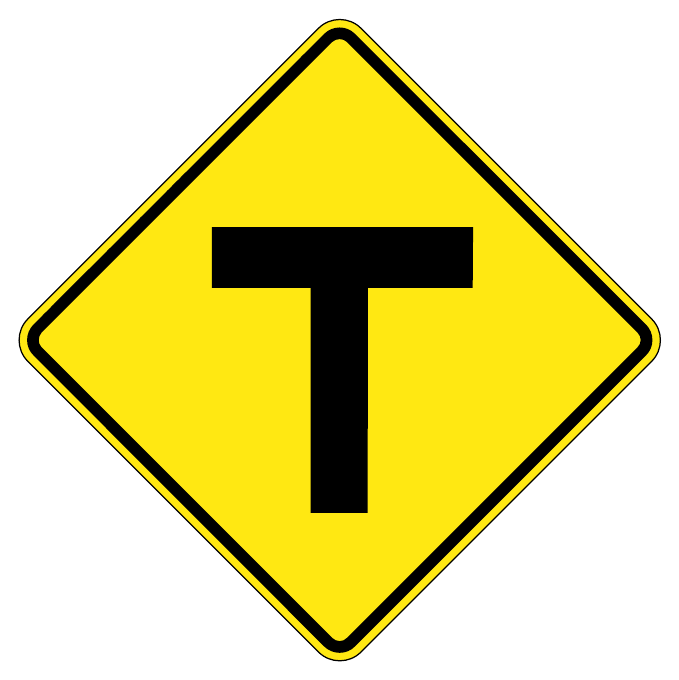
Your roadway approaches a T intersection where the road does not continue straight through.
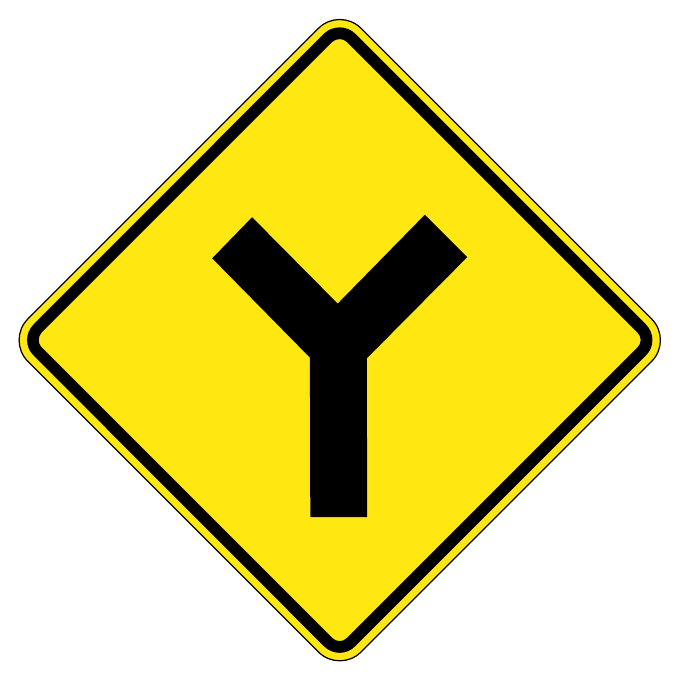
The roadway divides or meets another road in a Y-shaped intersection ahead.
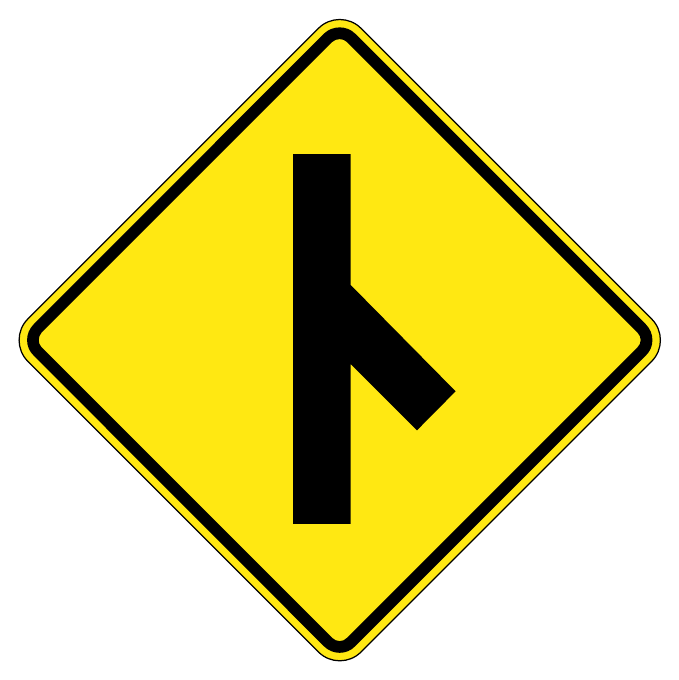
A side road joins from the right ahead.
A road or intersection on the right may be difficult to see until you are close to it.
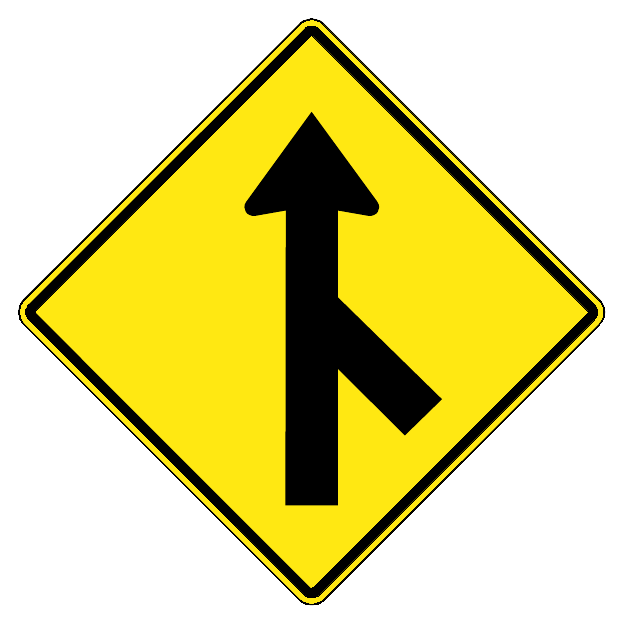
Traffic will merge with your roadway ahead; adjust speed and space to cooperate safely.
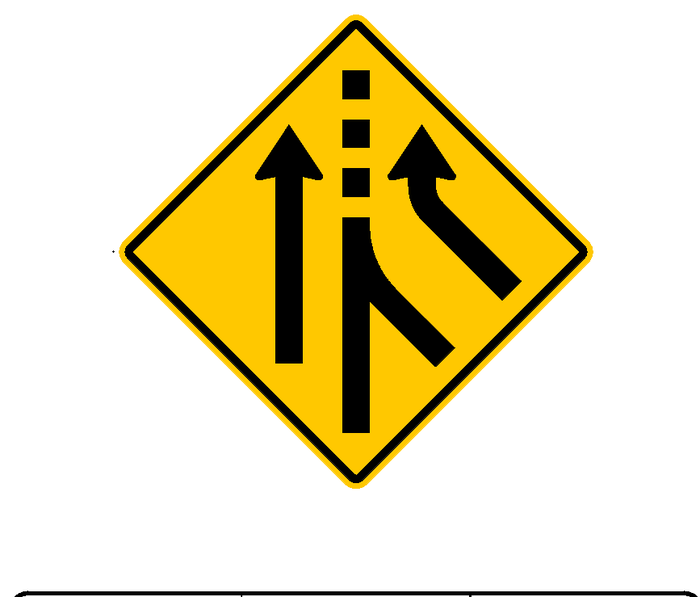
An added lane begins; entering traffic can continue in the new lane rather than immediately merging.
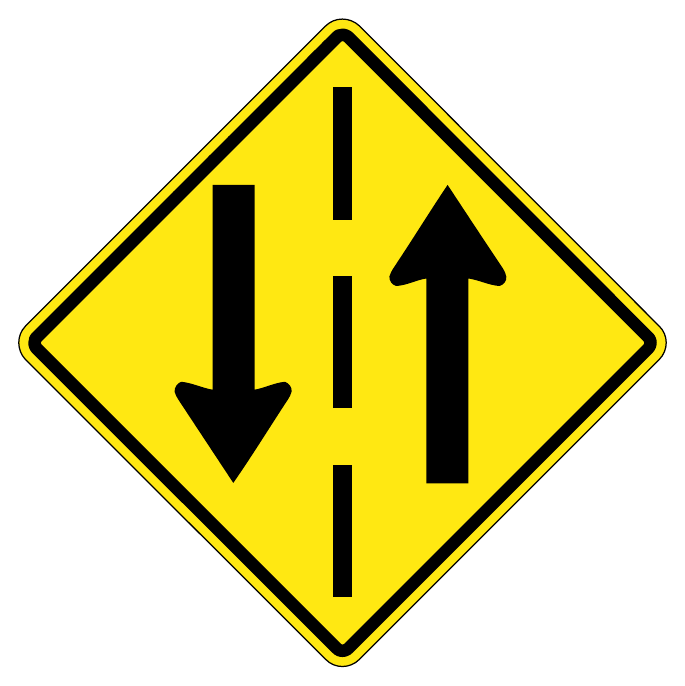
Traffic will travel in both directions on the roadway ahead.
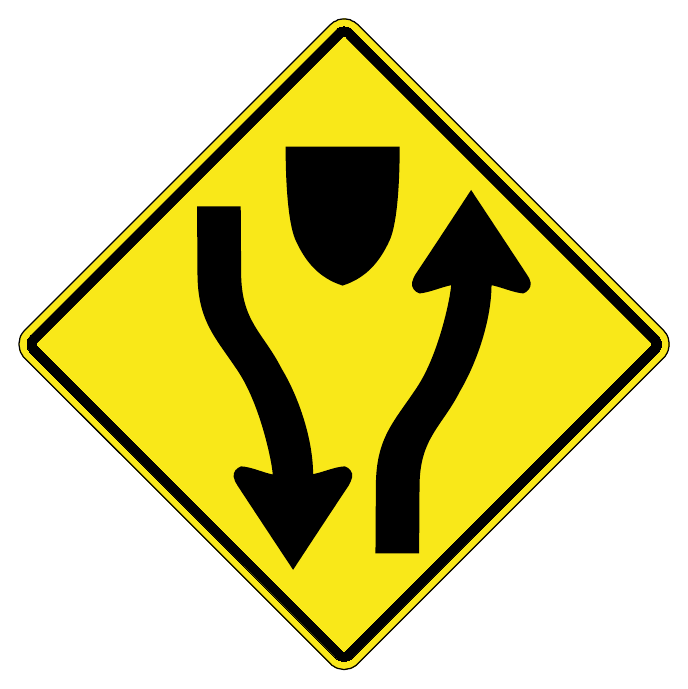
A median or divider begins ahead, separating opposing traffic.
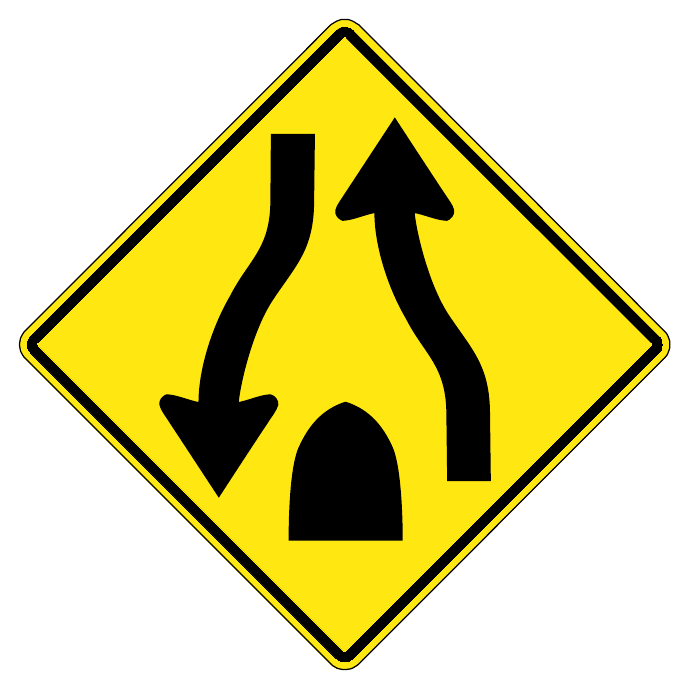
The divided highway ends ahead; opposing traffic will no longer be separated by the median.
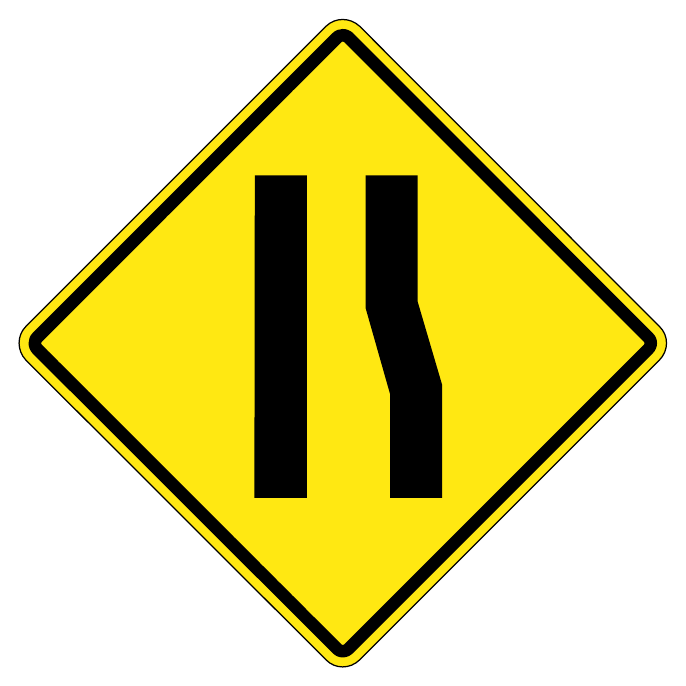
The roadway becomes narrower ahead; maintain lane position and allow space.
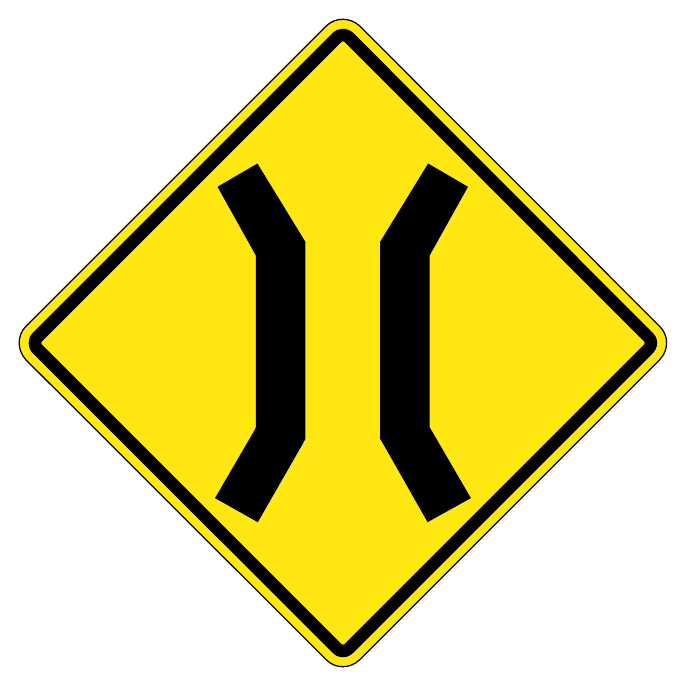
A bridge or structure ahead is narrower than the approaching roadway.
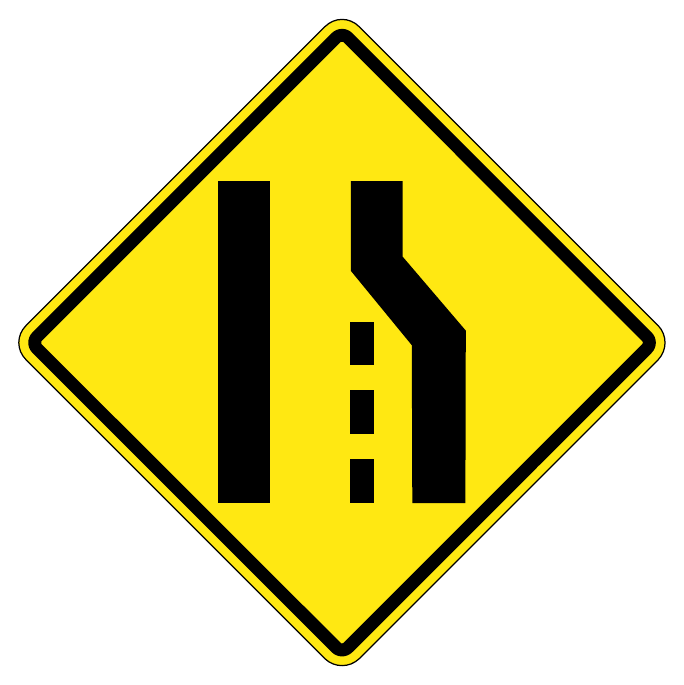
The right lane ends ahead; traffic in that lane must prepare to merge safely.
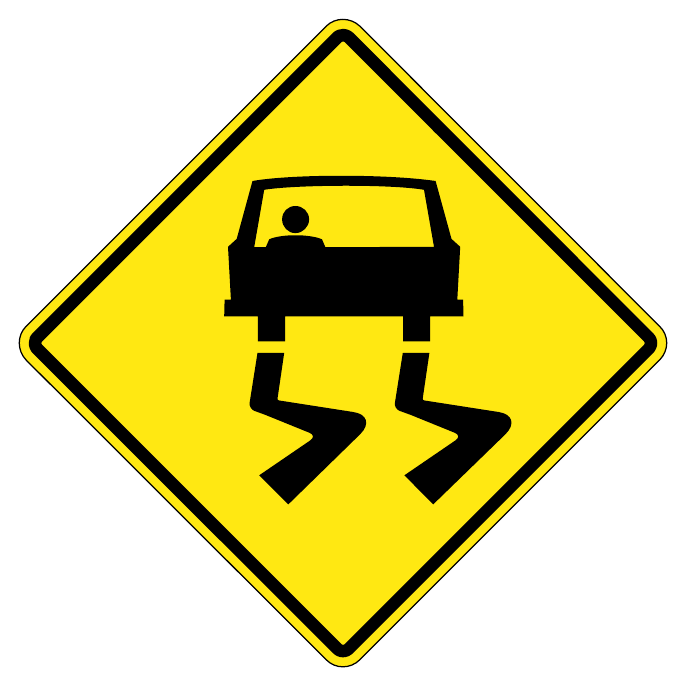
The roadway may be slippery, especially when wet; reduce speed and avoid abrupt steering or braking.
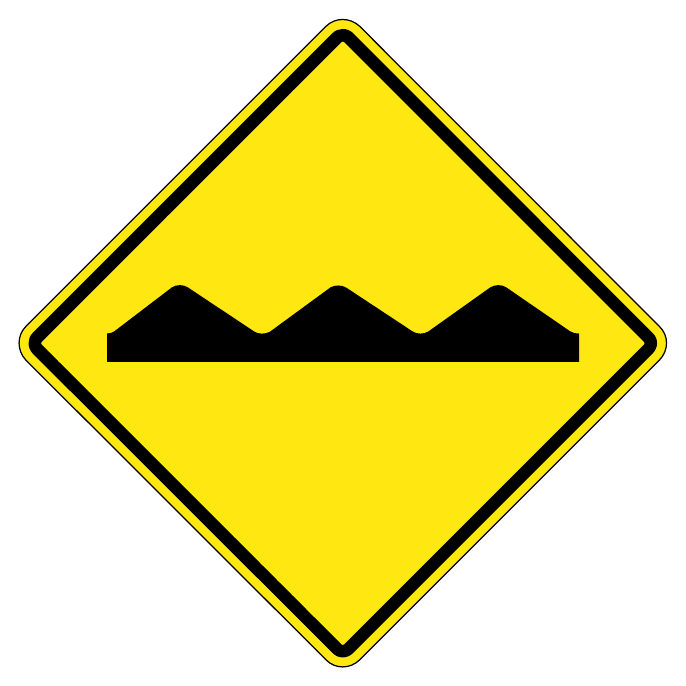
A bump or uneven pavement is ahead; reduce speed to maintain control and protect the vehicle.
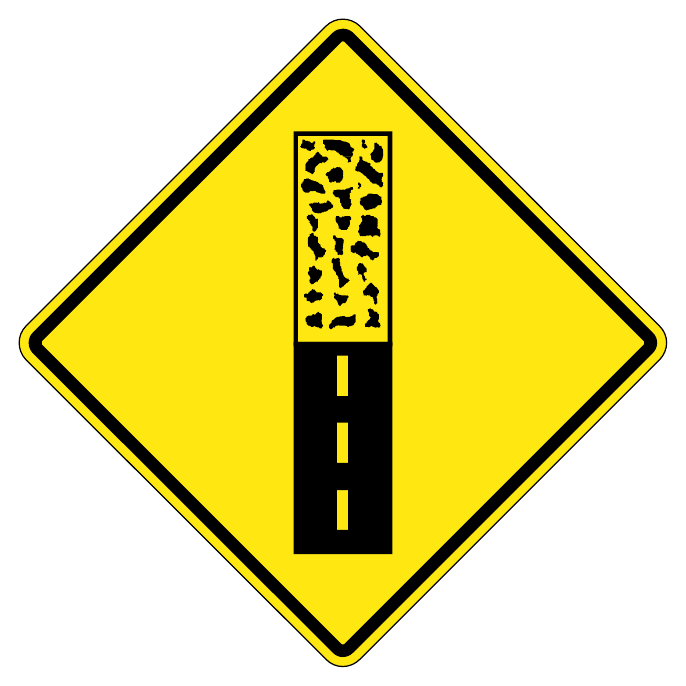
The paved surface ends ahead and the road surface changes; slow and adjust for reduced traction.
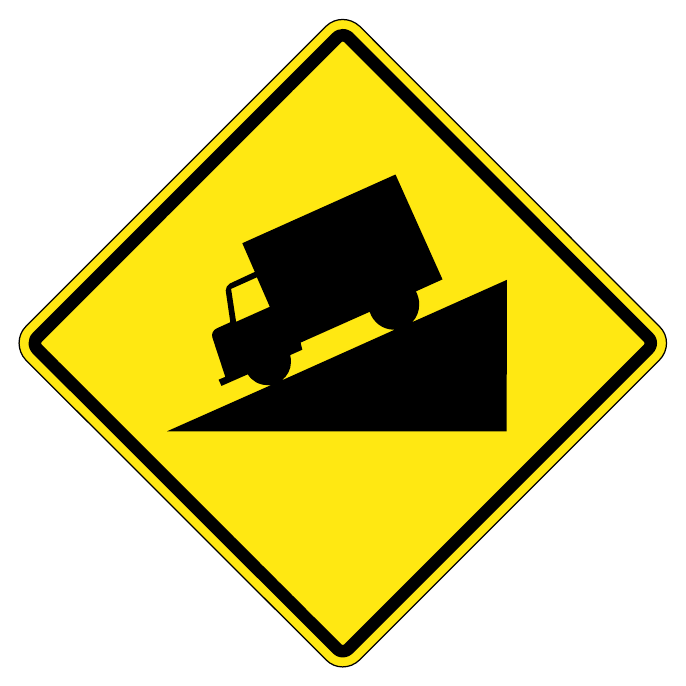
A steep downgrade is ahead; control speed early and use an appropriate gear/braking strategy.
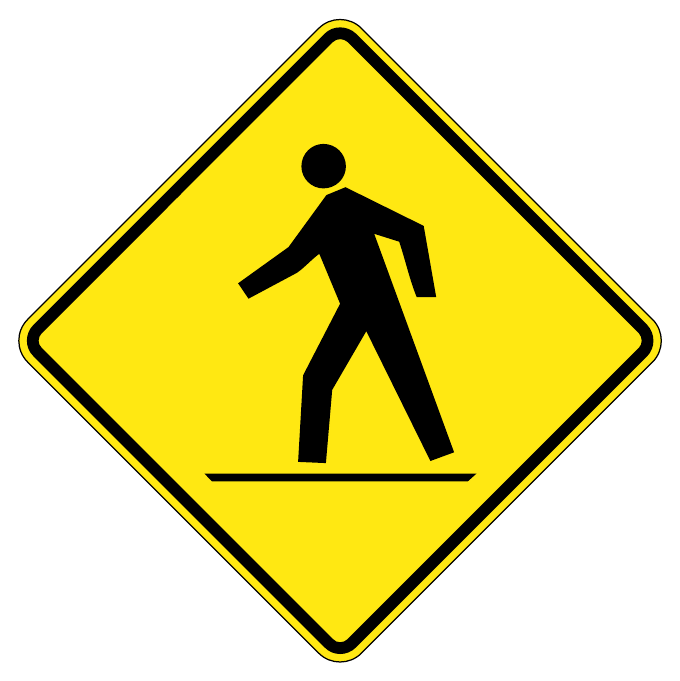
Watch for pedestrians who may be crossing the roadway ahead and be prepared to yield/stop as required.
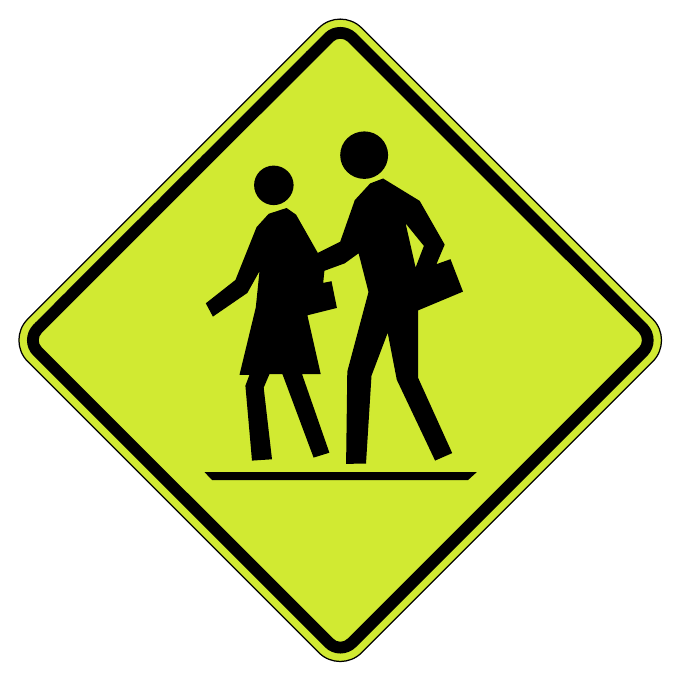
A school crosswalk is ahead; watch closely for children and be prepared to yield or stop.
A bicycle crossing or area of bicycle activity is ahead; scan and be prepared to yield as required.
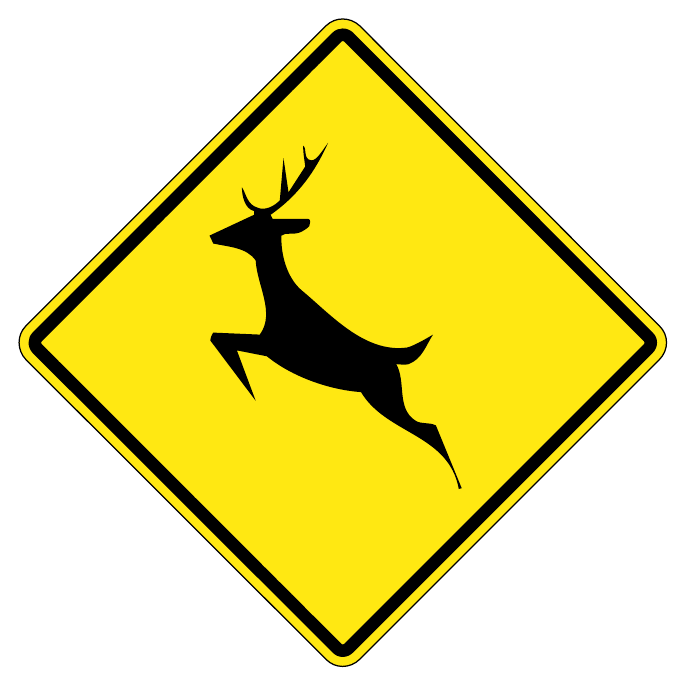
Wildlife such as deer may cross the roadway; reduce speed as needed and scan the shoulders.
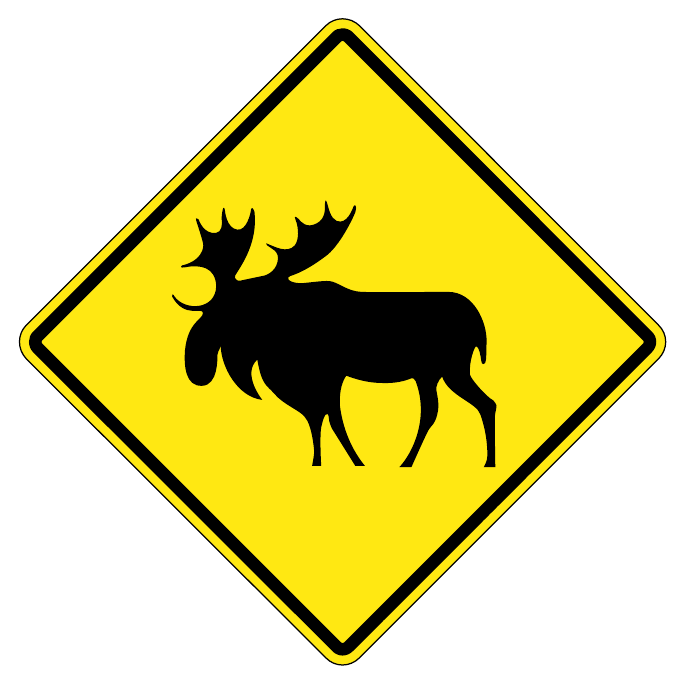
Moose may be present or cross the roadway; increase scanning distance and be prepared to slow.
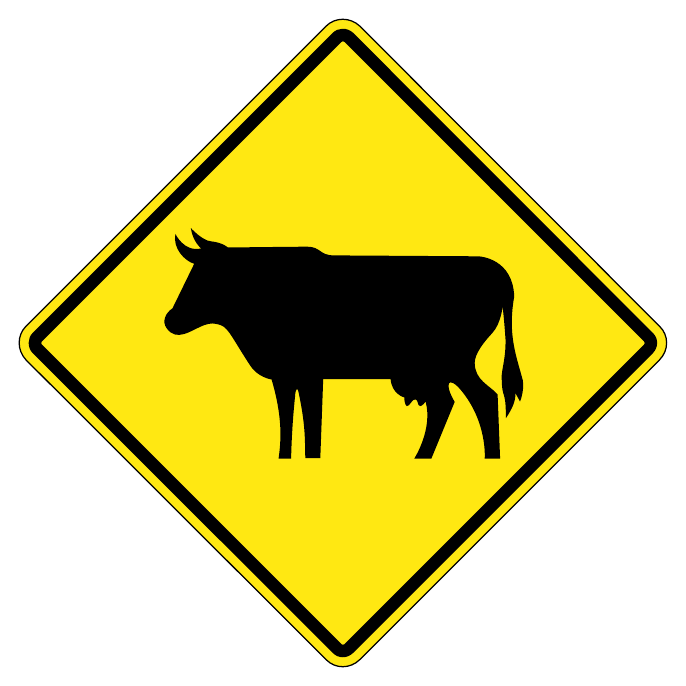
Cattle or livestock may be on or crossing the roadway ahead.
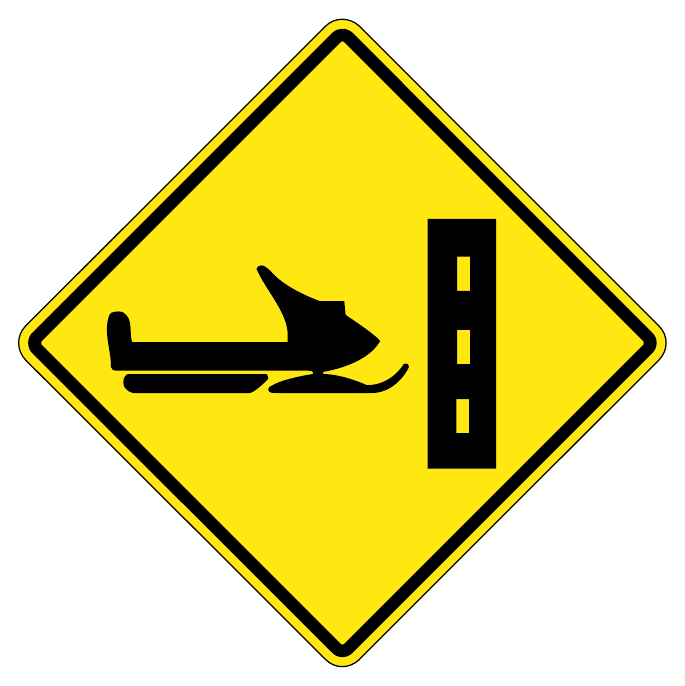
Motorized snow vehicles may cross the roadway ahead; watch for intermittent crossing traffic.
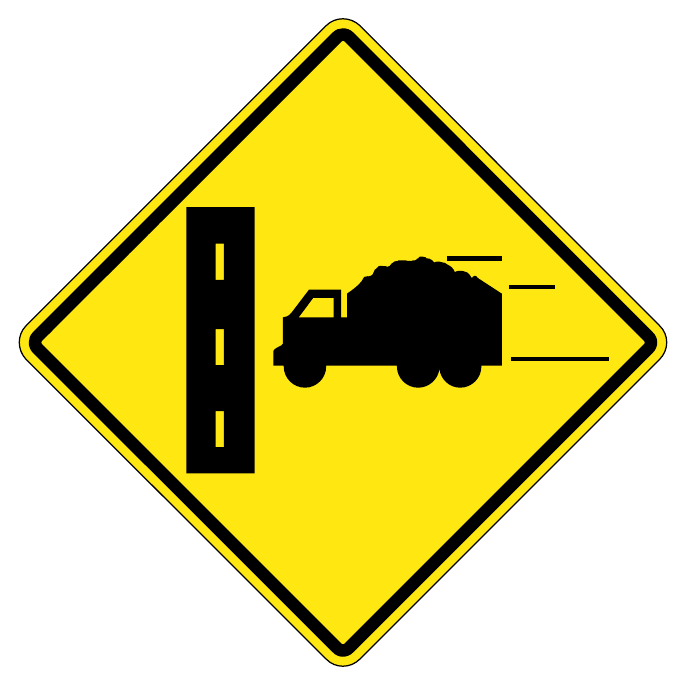
Trucks may enter the roadway from the side ahead; be prepared for slower acceleration and larger vehicles.
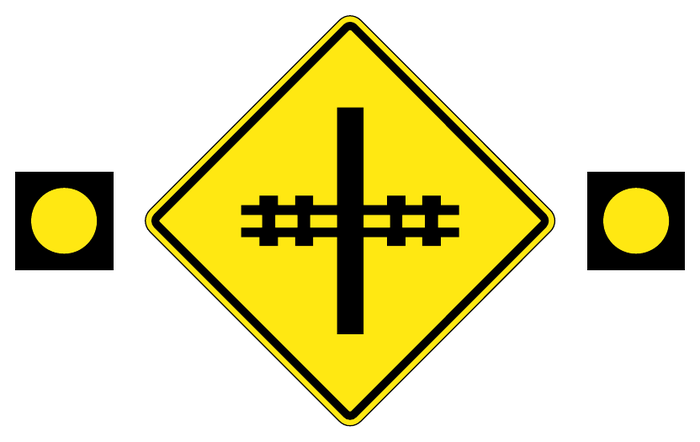
A railway crossing is ahead; scan for signals, gates, trains and traffic conditions.
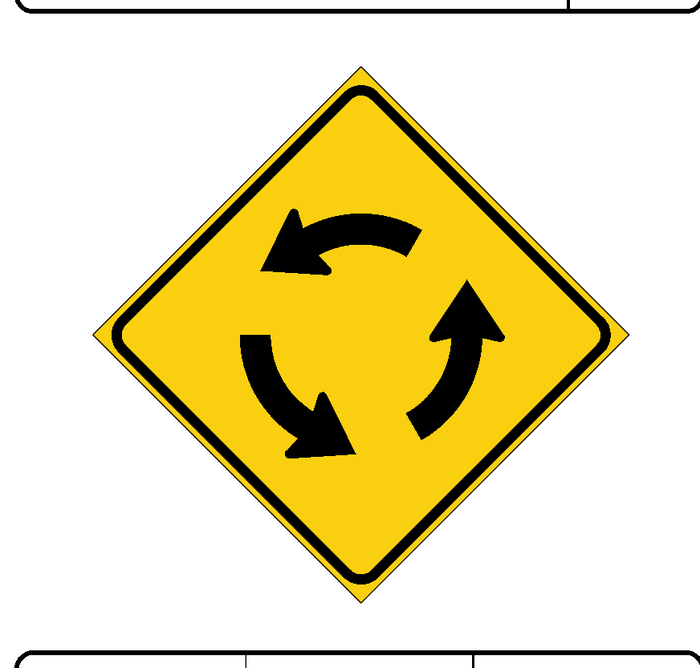
A roundabout is ahead; reduce speed, choose the correct lane and prepare to yield to traffic already in the roundabout.
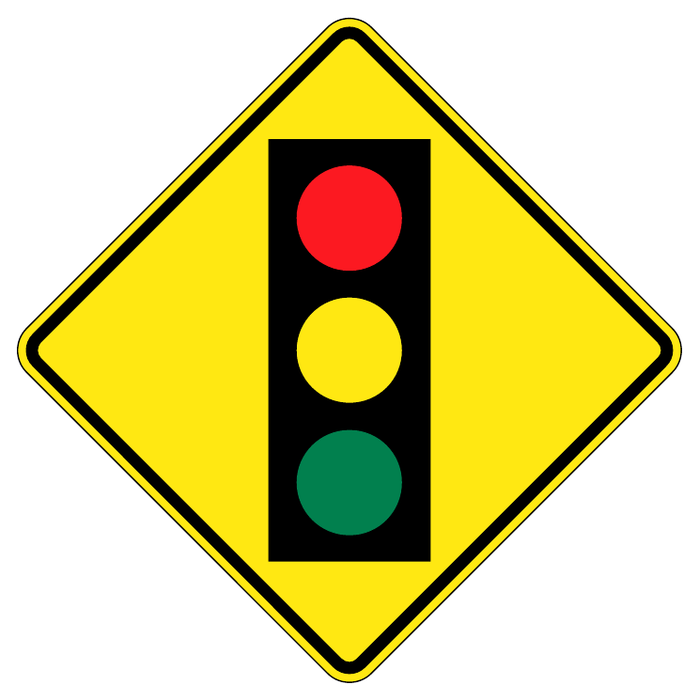
Traffic control signals are ahead; be prepared for the light to require a stop.
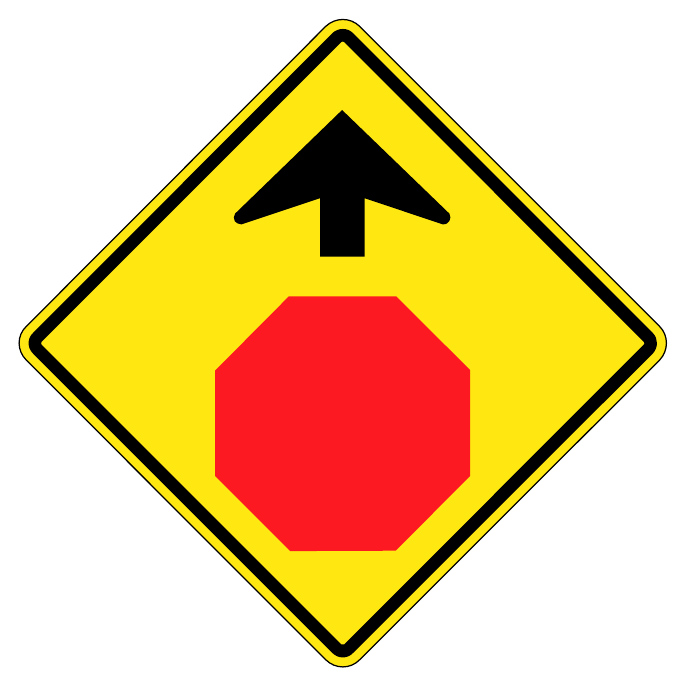
A stop sign is ahead; begin preparing to make a complete stop at the actual stop control.
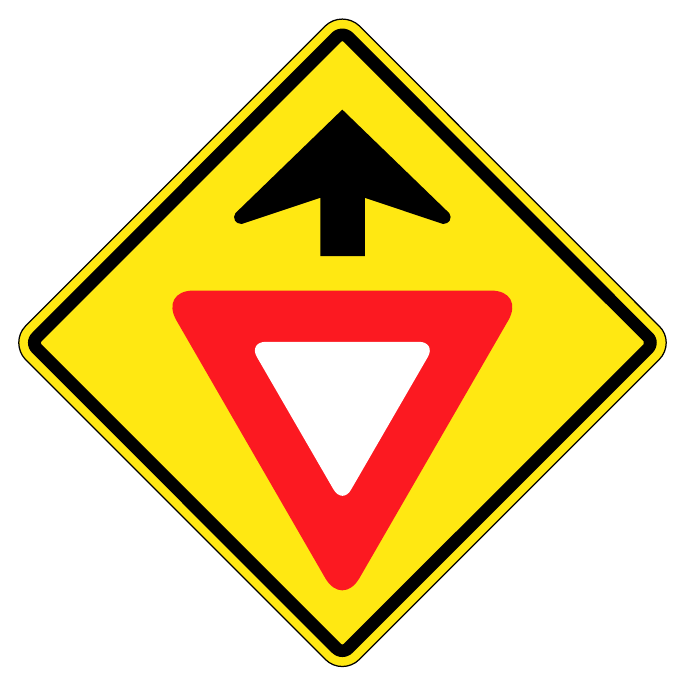
A yield sign is ahead; prepare to slow and give the right-of-way where required.
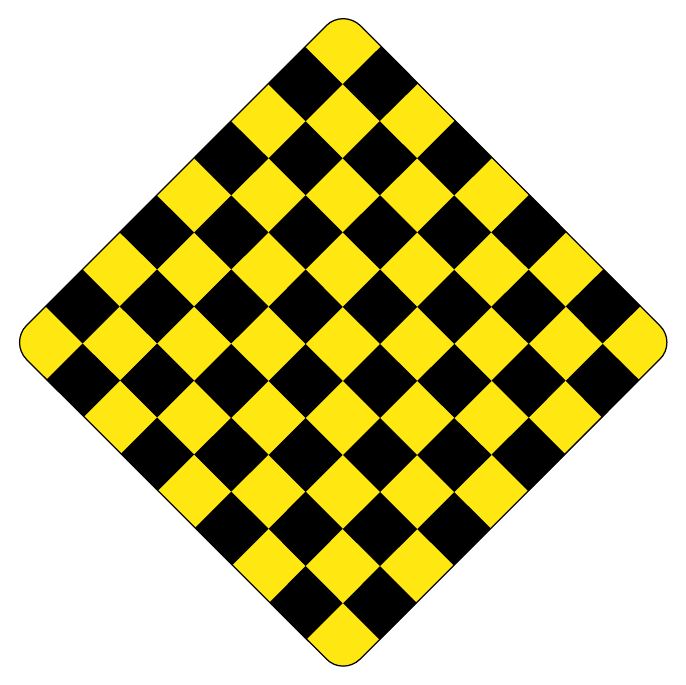
The road does not continue through; plan to turn around or use another route.
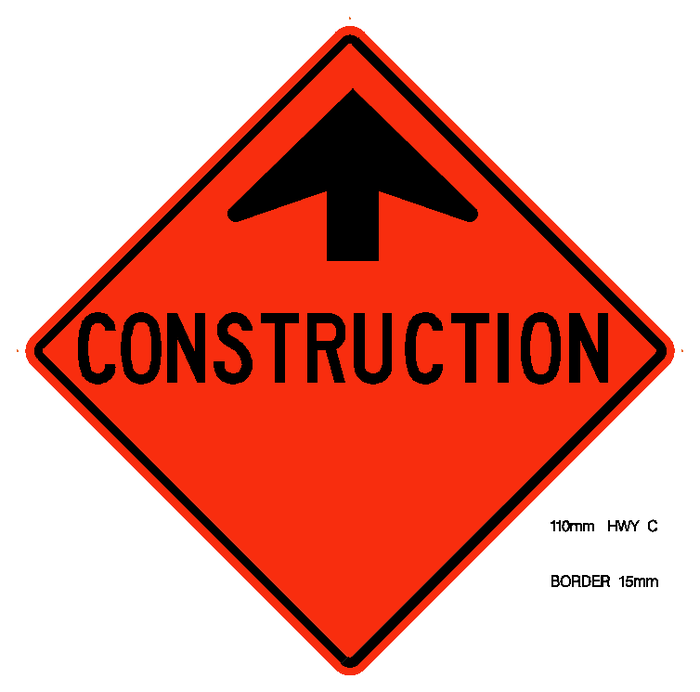
Road work or a temporary work zone is ahead; reduce speed and follow temporary signs and workers’ directions.
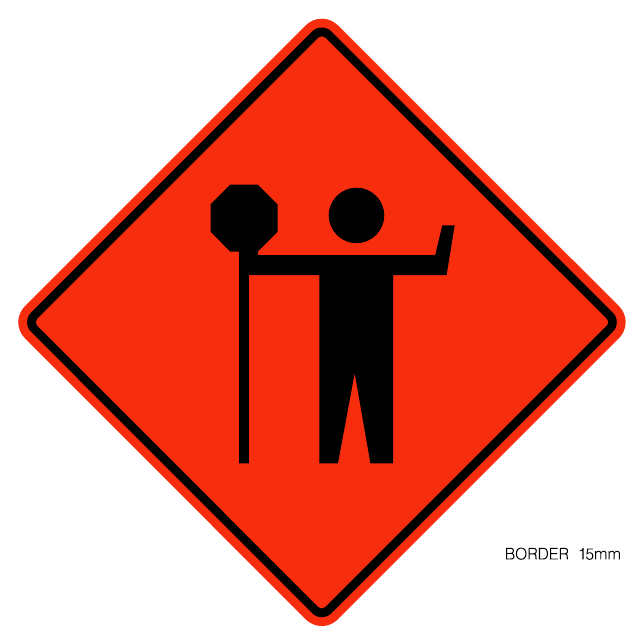
Workers may be on or close to the roadway; slow down and be prepared for changing traffic control.
A flagperson may be controlling traffic ahead; obey their directions.
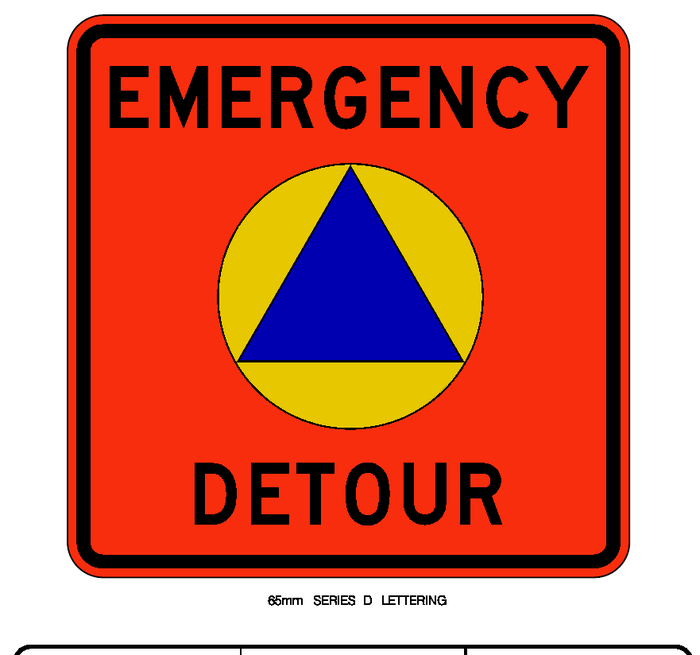
Follow the indicated temporary detour route in the arrow’s direction.
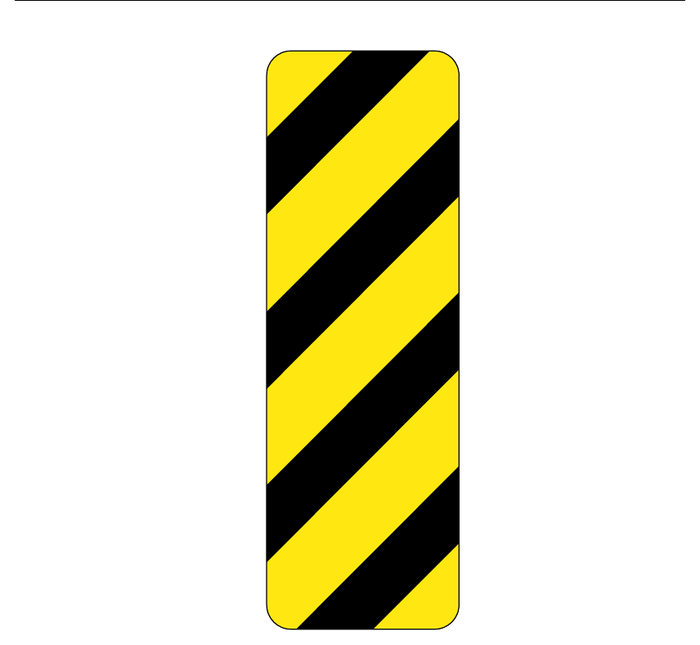
A fixed hazard or obstruction is close to the roadway; follow the marker’s guidance around it.
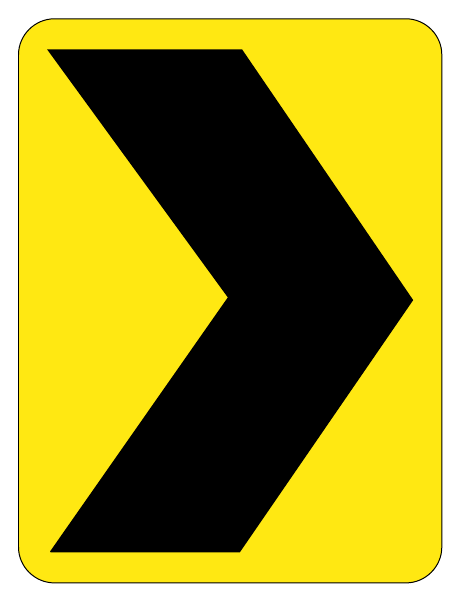
The roadway changes direction sharply; follow the chevrons through the curve.
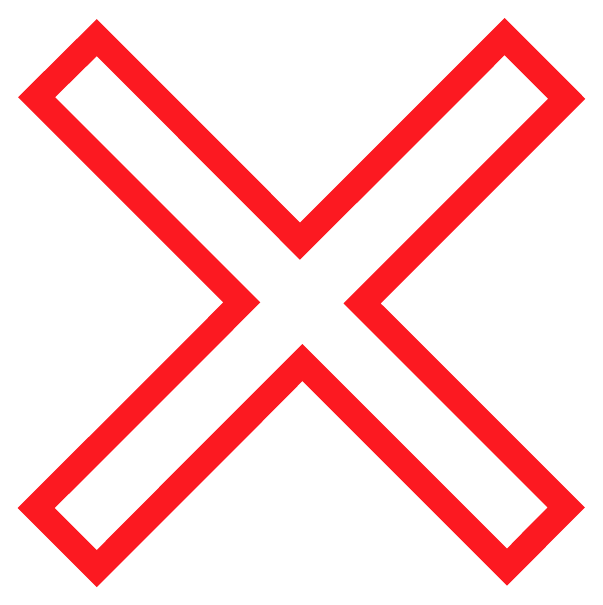
You are at a railway crossing. Check for trains and obey any lights, bells, gates or other controls before crossing.
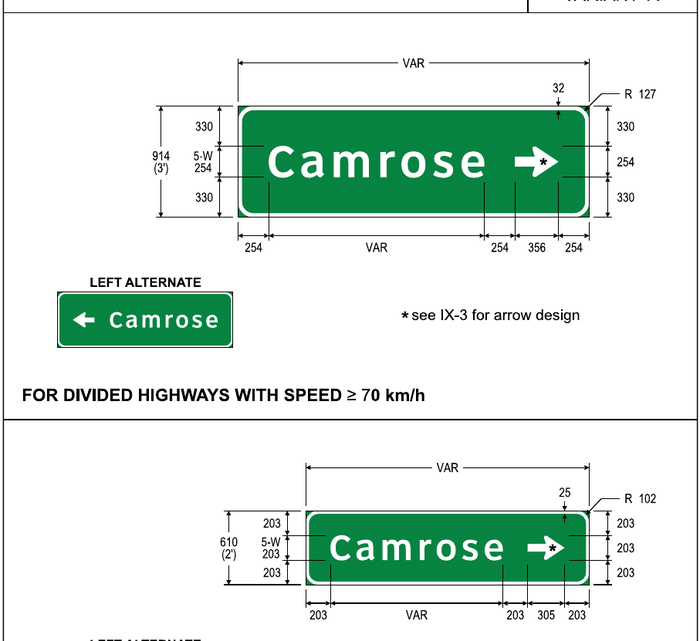
The sign provides route, destination or distance information rather than imposing a traffic prohibition.
The sign directs road users to an available service or facility.
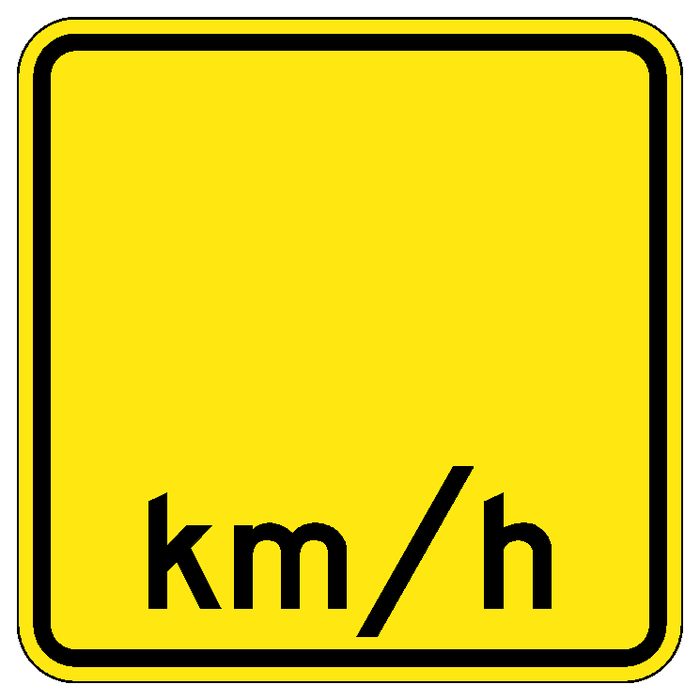
The curve is ahead and the displayed advisory speed gives guidance for the curve; it is not the same type of sign as a regulatory maximum-speed sign.
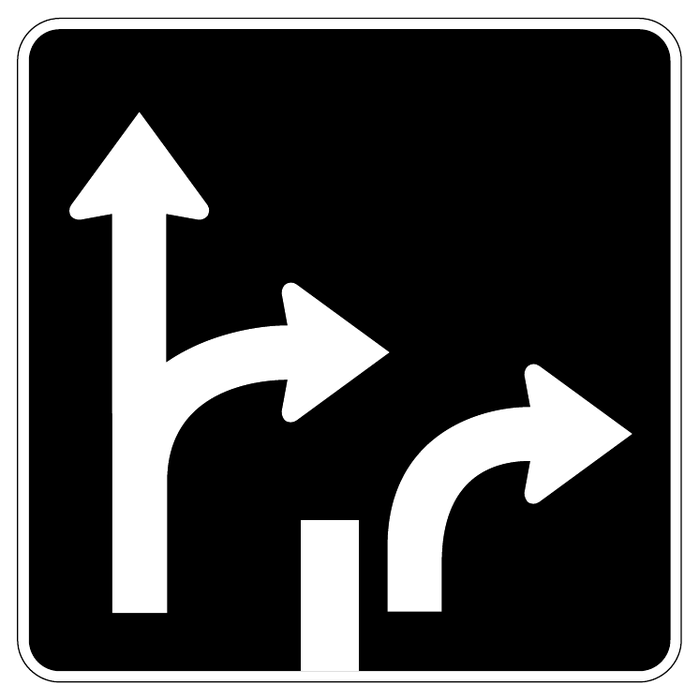
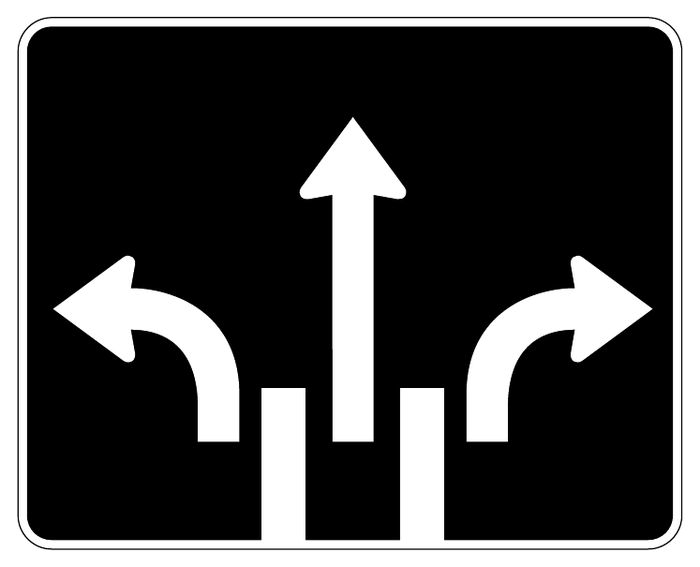
Use the lane according to the movement arrows shown; choose the correct lane before reaching the intersection.
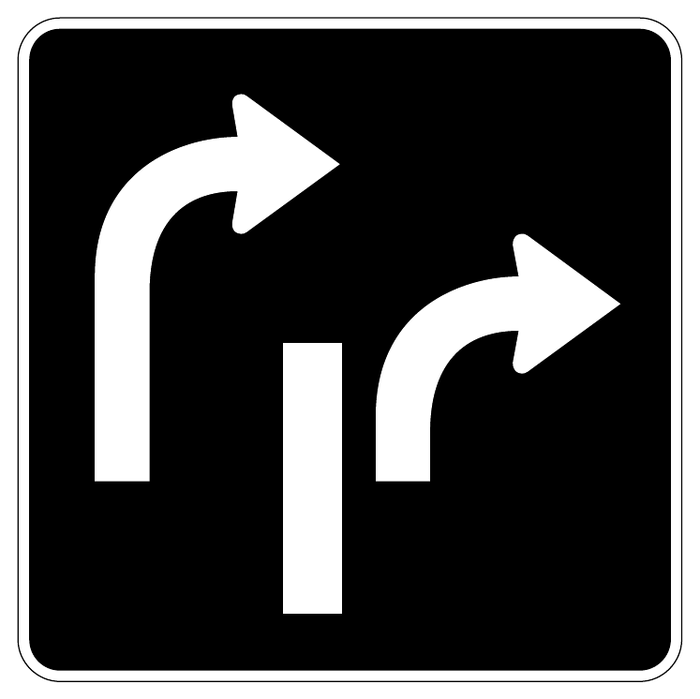
Two lanes are authorized to make the indicated turn; stay in your corresponding lane through the turn.
The lane is reserved for the vehicle types shown, subject to any posted times.
Read the arrows with the parking restriction: they show the direction or extent of the controlled curb area.
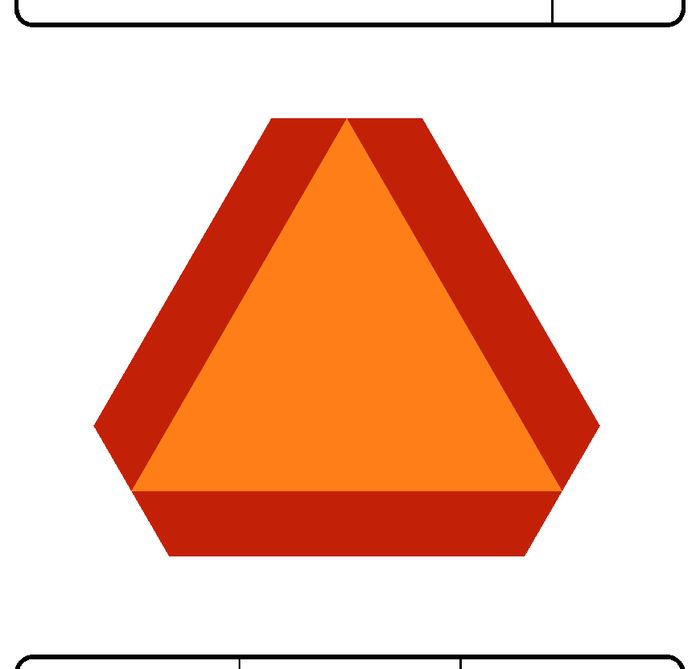
The vehicle displaying this emblem is designed to travel at a slow speed; approach carefully and judge closing speed before passing.
A railway crossing is approaching; increase scanning and be prepared to stop if a train or control device requires it.
Sign images are sourced from Alberta Transportation's official Traffic Sign Catalogue. Always follow the sign installed on the road, current conditions, and current Alberta rules. View the official catalogue.